
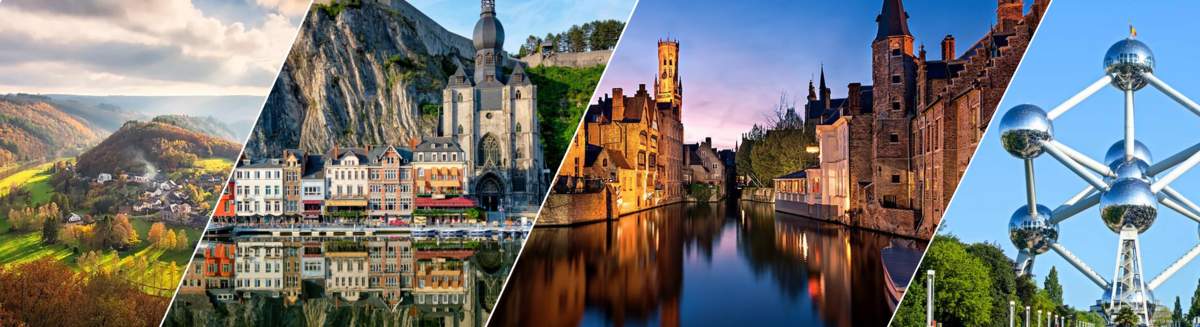
Belgium: Questions and Answers
Where to shoot, when to shoot, and what can go wrong. The questions photographers and clients ask most — answered with specific places, hours of light and rules, not generalities.
Locations: where to go, and when
Twelve proven destinations — from postcard canals to a forest that blooms for two weeks a year. Every card covers what to shoot, the best light, the best season and the main catch.
📍 Explore Belgium on Google Maps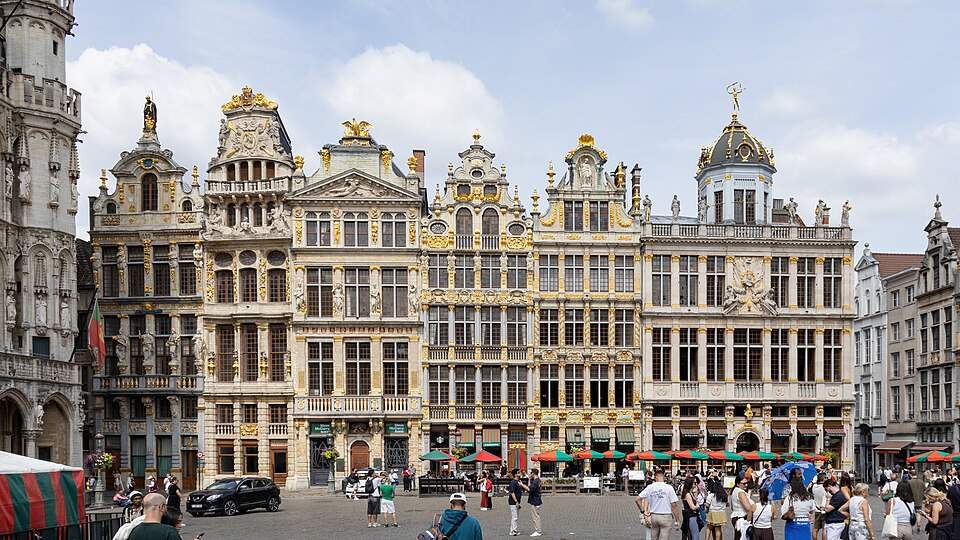
Brussels — Grand-Place and the centre
The classic · UNESCO
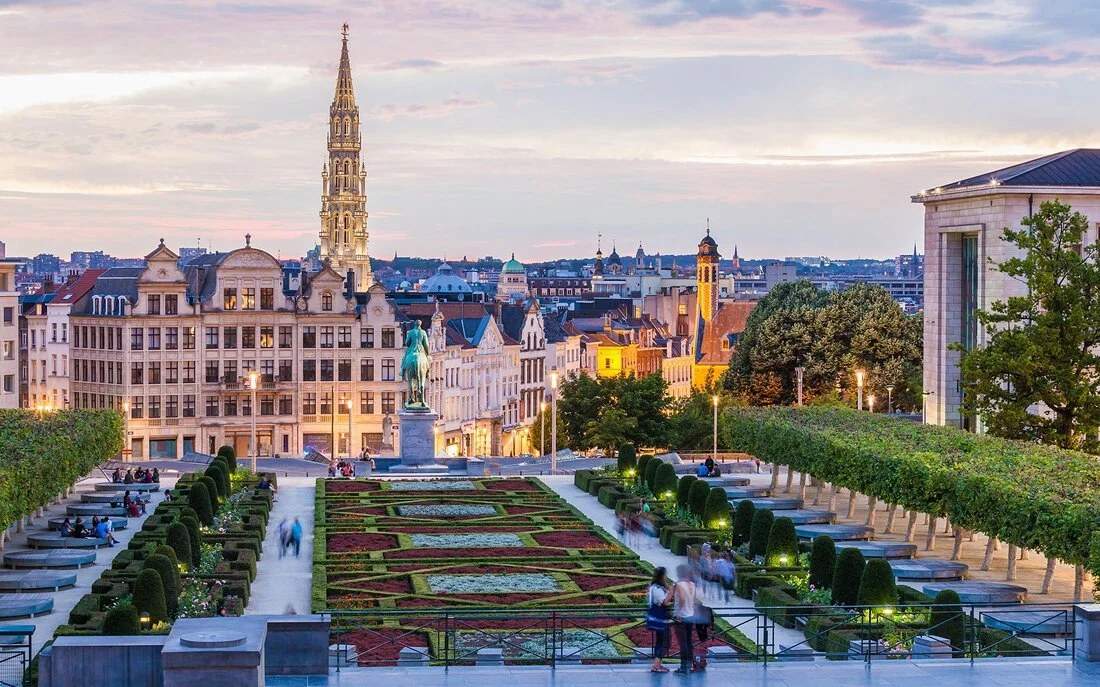
The most ornate square in Europe: gilded guild houses, the Town Hall, and nearby the Galeries Royales Saint-Hubert (covered — a lifesaver in the rain) and the view from Mont des Arts. For weddings and portraits — early in the morning, while the square is empty.
- LightSunrise — an empty square; evening — the warm glow of the facades.
- SeasonAll year. The Flower Carpet on the square — mid-August, every two years.
- The catchCrowds and tour groups by day; the square is regularly closed off for events.
- LocationOpen in Google Maps
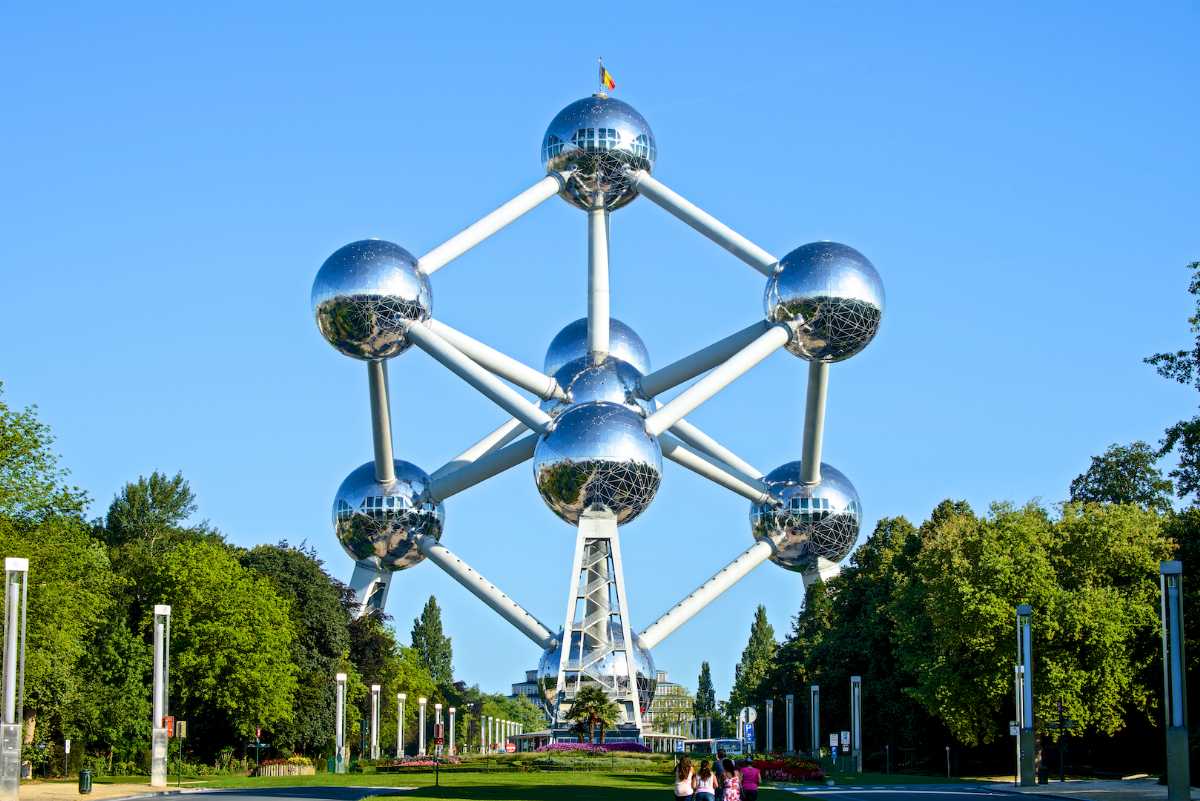
Brussels — the Atomium and Laeken
Modern · architecture
The Atomium's mirrored spheres make a strong graphic backdrop for portraits and brand shoots. Nearby are Laeken Park and the Royal Greenhouses: a glass city by Alphonse Balat, the teacher of Victor Horta.
- LightMorning — clean reflections in the spheres; an overcast day gives an even “softbox”.
- SeasonThe greenhouses open to the public for only ~3 weeks a year; tickets sell out within days.
- The catchThe flow of visitors inside the greenhouses never stops — you shoot on the move.
- LocationOpen in Google Maps
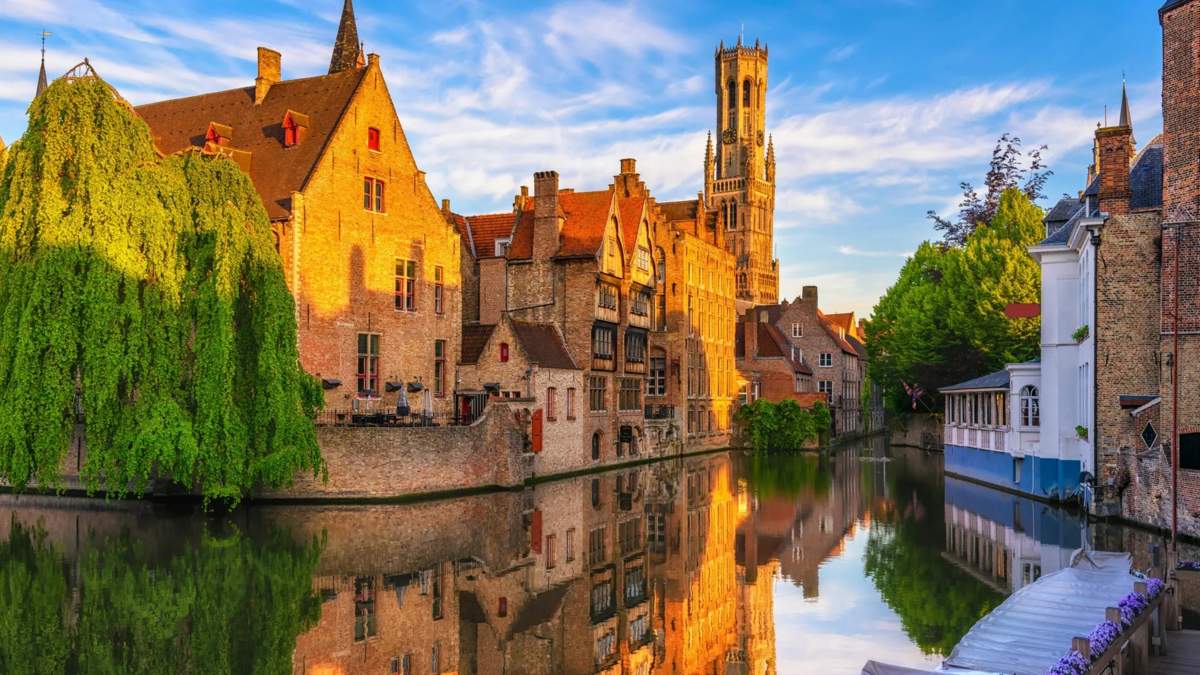
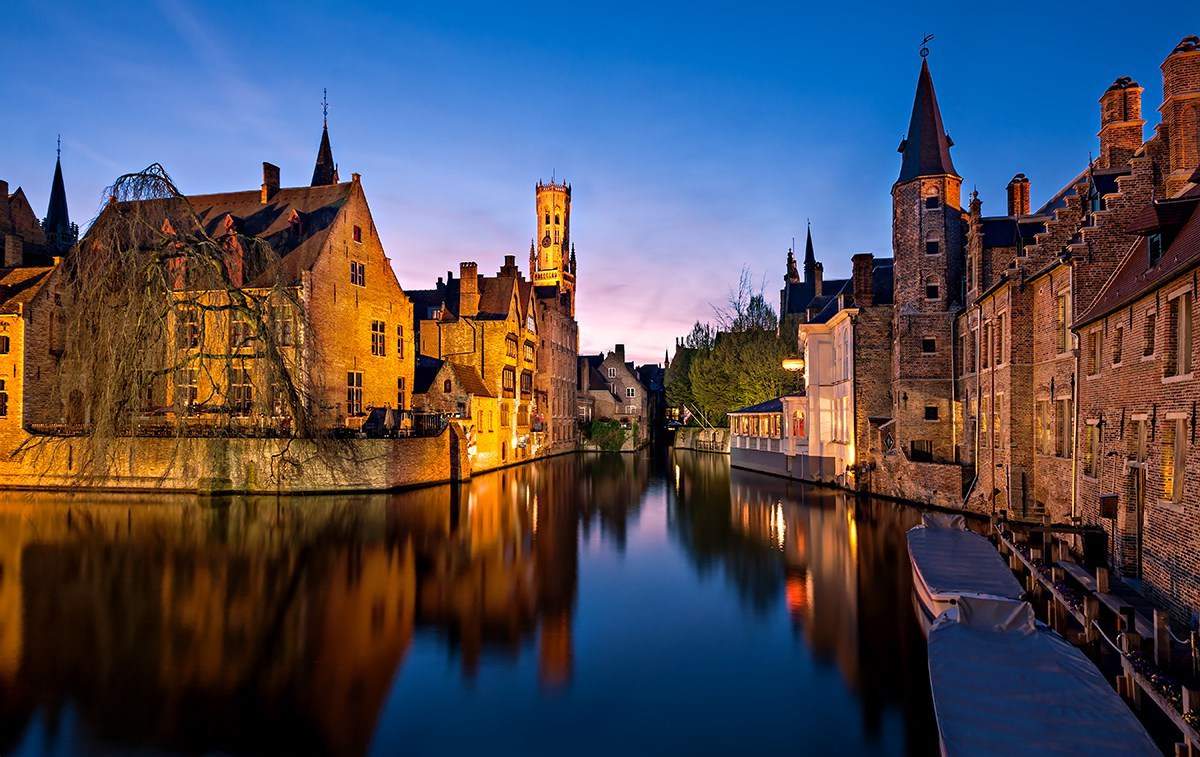
Bruges
Fairytale · canals
The country's postcard shot — Rozenhoedkaai: the canal, the willow and the Belfry in a single frame. Then the Markt and the Burg, the Church of Our Lady, and the quiet south: the Beguinage and the Lake of Love (Minnewater).
- LightSunrise only: by 10:00 the centre is packed with groups, and wind and boats “break” the reflections in the canals.
- SeasonApril–June and September–October. In winter — the Christmas market and mist over the canals.
- The catchDay-trippers from Brussels: by midday you can't move. Staying the night in the city solves everything.
- LocationOpen in Google Maps
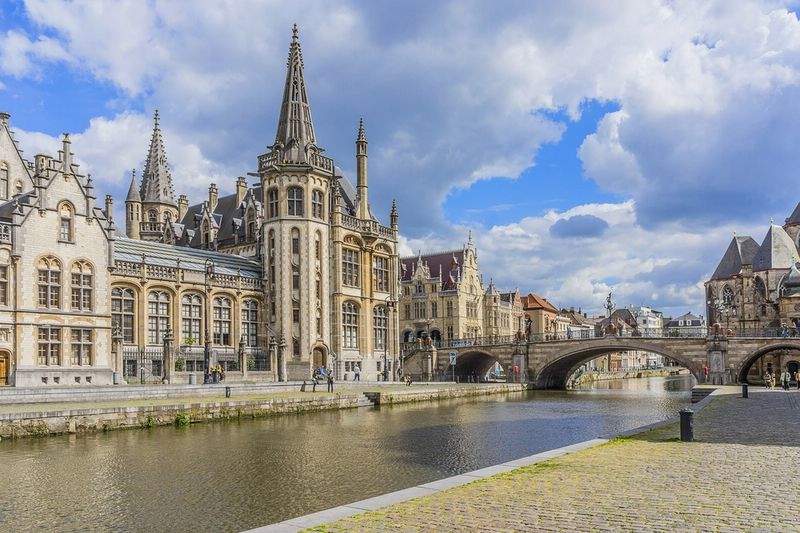
Ghent
Medieval, without the crowds
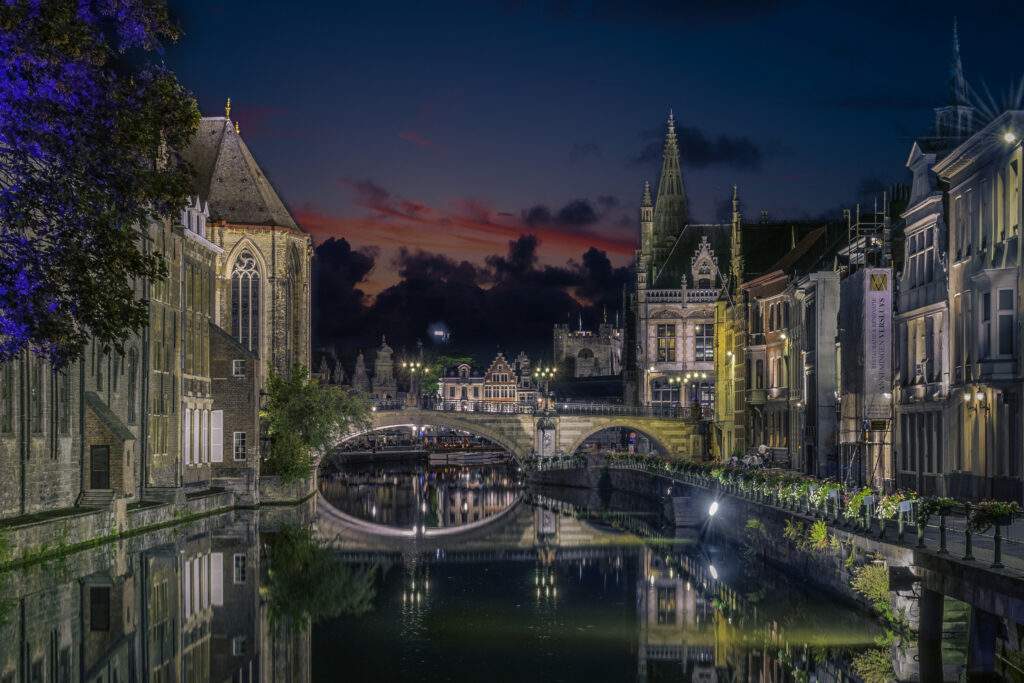
The Graslei and Korenlei embankments, the view from St Michael's Bridge taking in all three towers at once, and the Gravensteen castle. The same medieval texture as Bruges, but the city is alive and student-run — and noticeably less crowded.
- LightSunset and the blue hour: the embankment lights come on — reflections in the Leie.
- SeasonAll year; in July, the ten-day Gentse Feesten festival (the city doesn't sleep — but it doesn't empty either).
- The catchIn the evening the embankments are a hangout spot: for a clean frame, still come at dawn.
- LocationOpen in Google Maps
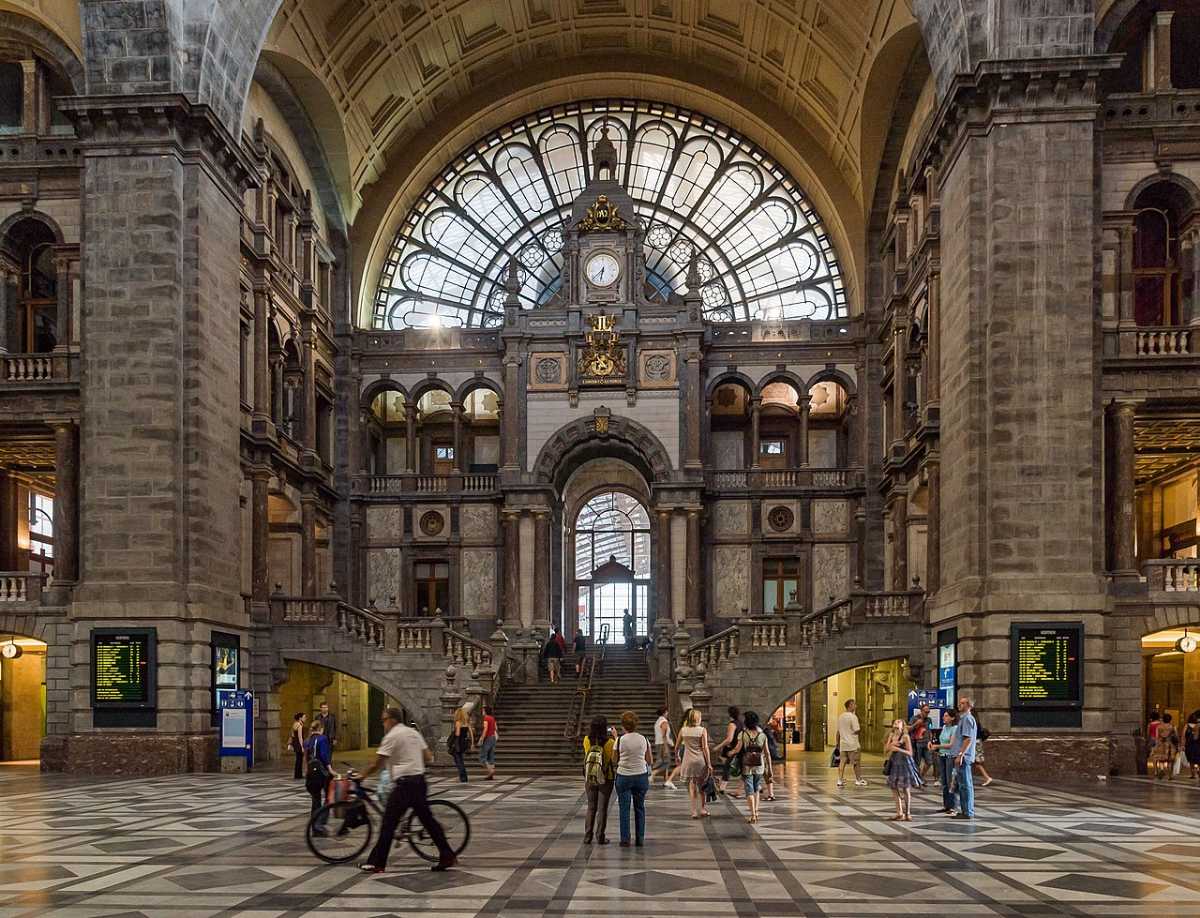
Antwerp
Architecture · fashion
Central Station — a “railway cathedral”: stone, glass and a vast arch, a ready-made backdrop for editorial portraits. Then the Cathedral of Our Lady, the Scheldt embankment and the view from the roof of the MAS museum.
- LightWeekday mornings: the station empties between trains, and the light through the vault is soft.
- SeasonAll year — half of the key spots are under a roof, so rain is no threat.
- The catchThe station is fully operational: commercial shooting with a tripod and lights needs clearance.
- LocationOpen in Google Maps
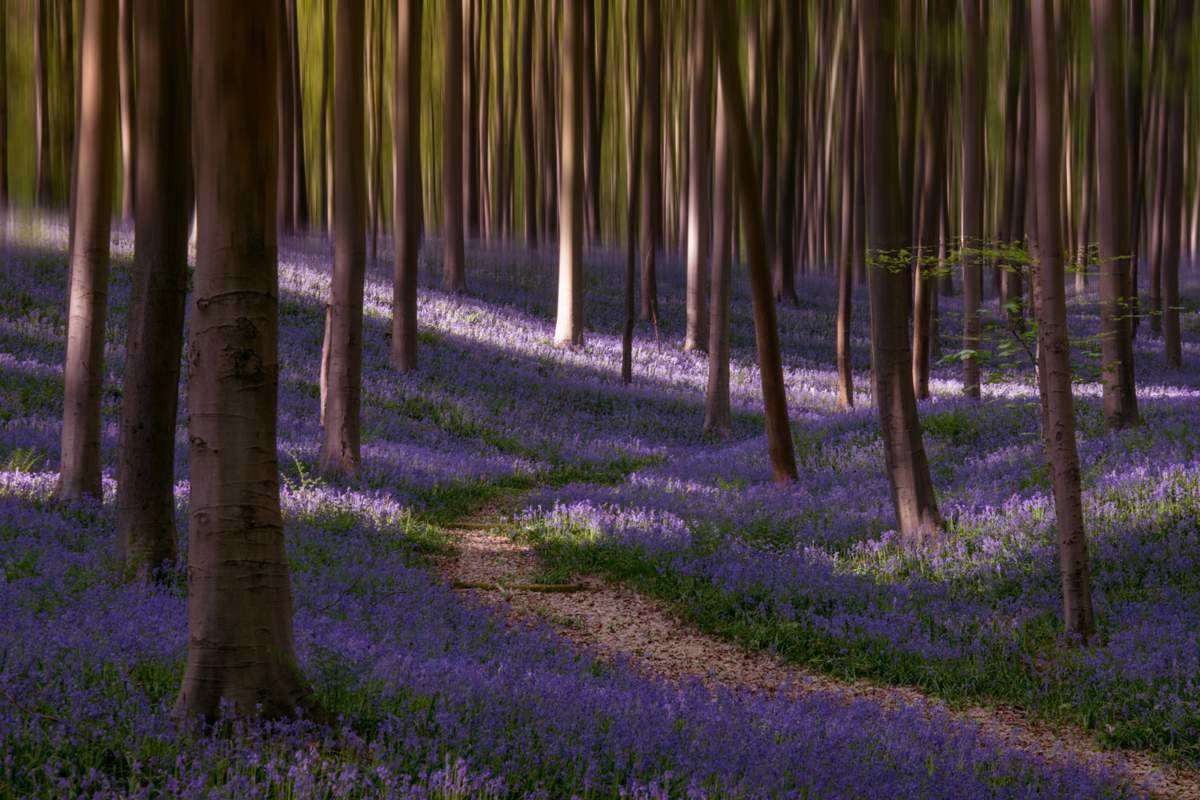
Hallerbos — the “blue forest”
Nature · 2 weeks a year
A beech forest near Halle where in April the ground is covered end to end with bluebells. A fairytale backdrop for love stories and family shoots — and the shortest-lived “location” in the country.
- LightEarly morning on a weekday: sunbeams through young leaves, mist, nobody around.
- SeasonPeak bloom — usually mid-April, ± a week depending on the weather. After that — ordinary green.
- The catchStepping off the paths is forbidden: the flowers die, and the forest is protected. We shoot from the paths only.
- LocationOpen in Google Maps
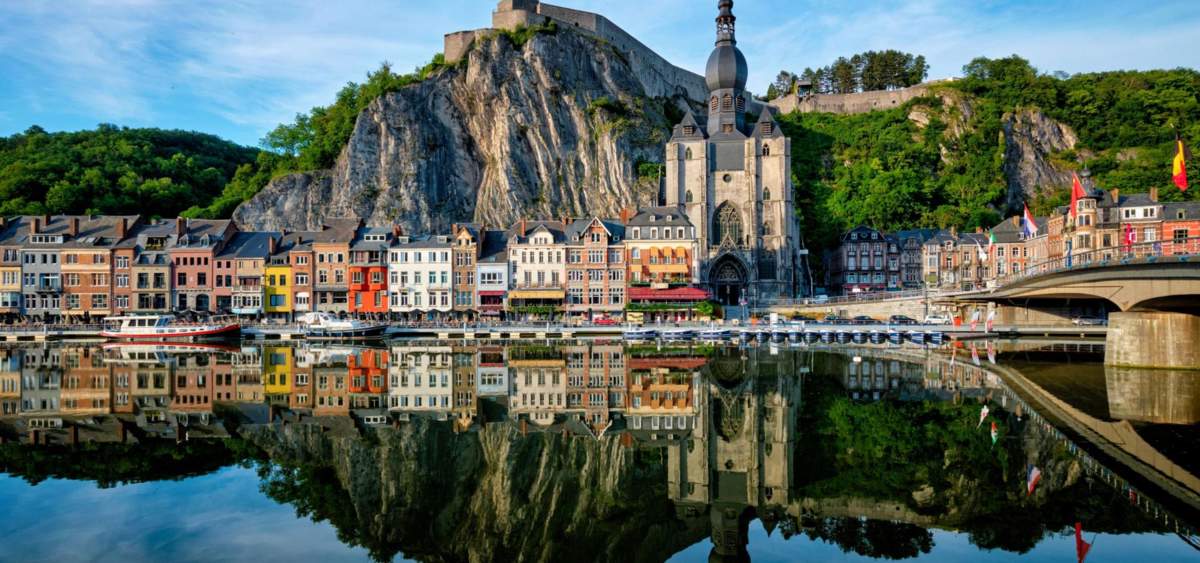
Dinant and the Ardennes
Drama · river and rock
A town pressed against the rock: a collegiate church with an onion spire, the citadel above, and the mirror of the river Meuse. The Ardennes around it — forests, castles and bends of rivers, for shoots with character rather than a “postcard”.
- LightMorning — smooth water and the town's reflection; evening — the warm rock.
- SeasonMay–June and October (the gold of the forests). In winter, snow is possible — a rare bonus for Belgium.
- The catch~1.5 hours from Brussels: a trip of its own, not a “quick stop on the way”.
- LocationOpen in Google Maps
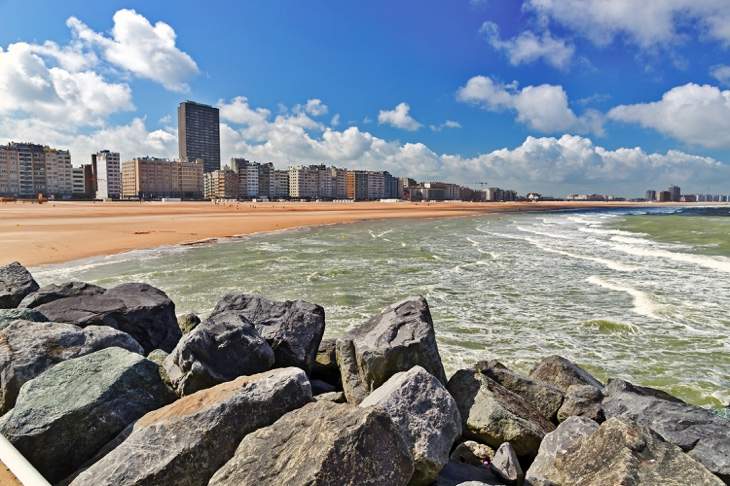
The North Sea coast
Wind · open space
65 kilometres of sand from De Panne to Knokke-Heist. Wide beaches, dunes, breakwaters, and the coastal tram that runs the whole length of the shore. A strong wind is part of the picture, not a hindrance.
- LightSunset over the sea (the coast faces north-west) and dramatic skies after a storm.
- SeasonMay–September. In July–August the resorts are packed; in May and September — spacious.
- The catchThe tides reshape the beach twice a day: check the timetable — “your” strip of sand can go under water.
- LocationOpen in Google Maps
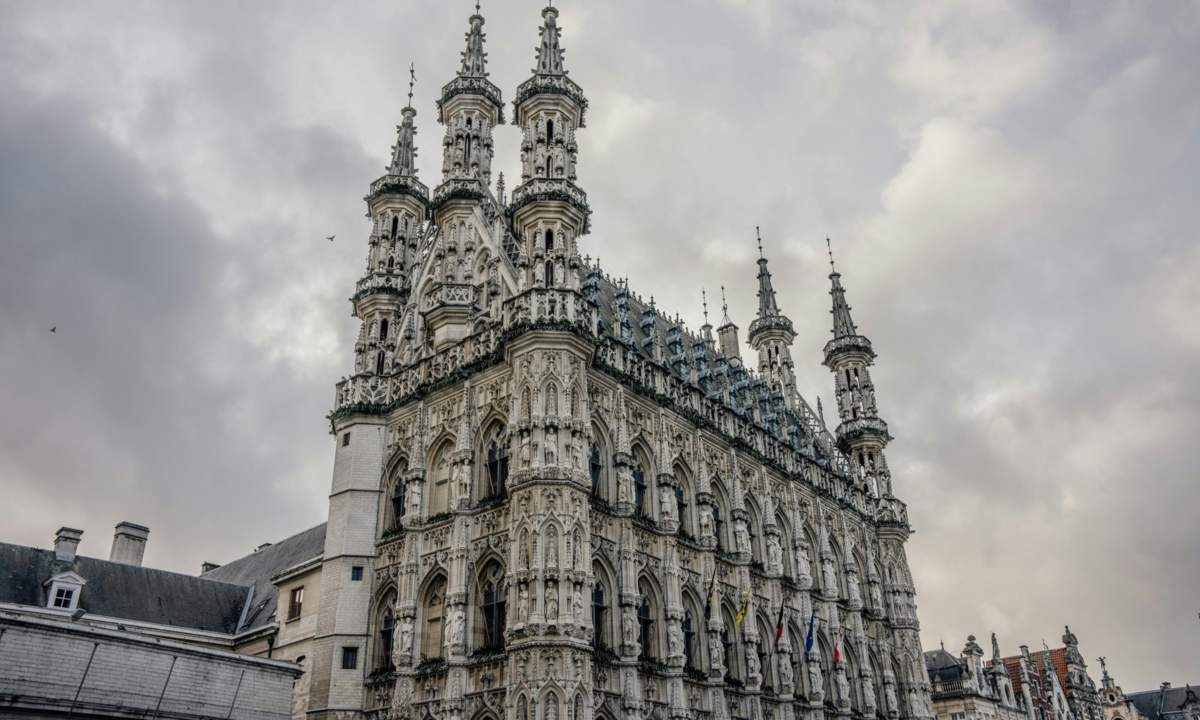
Leuven
University · Gothic
The country's oldest university and a town hall like “lacework” on the Grote Markt: hundreds of statues in the facade's niches. The Grand Beguinage, a UNESCO site, and Belgium's oldest botanical garden — with a fraction of Bruges' tourists.
- LightMorning — soft light on the town hall facade; an overcast day brings out the stone carving.
- SeasonAll year; in September the city comes alive with the students.
- The catchOn weekends the centre is closed off for events and markets — check the city's calendar.
- LocationOpen in Google Maps
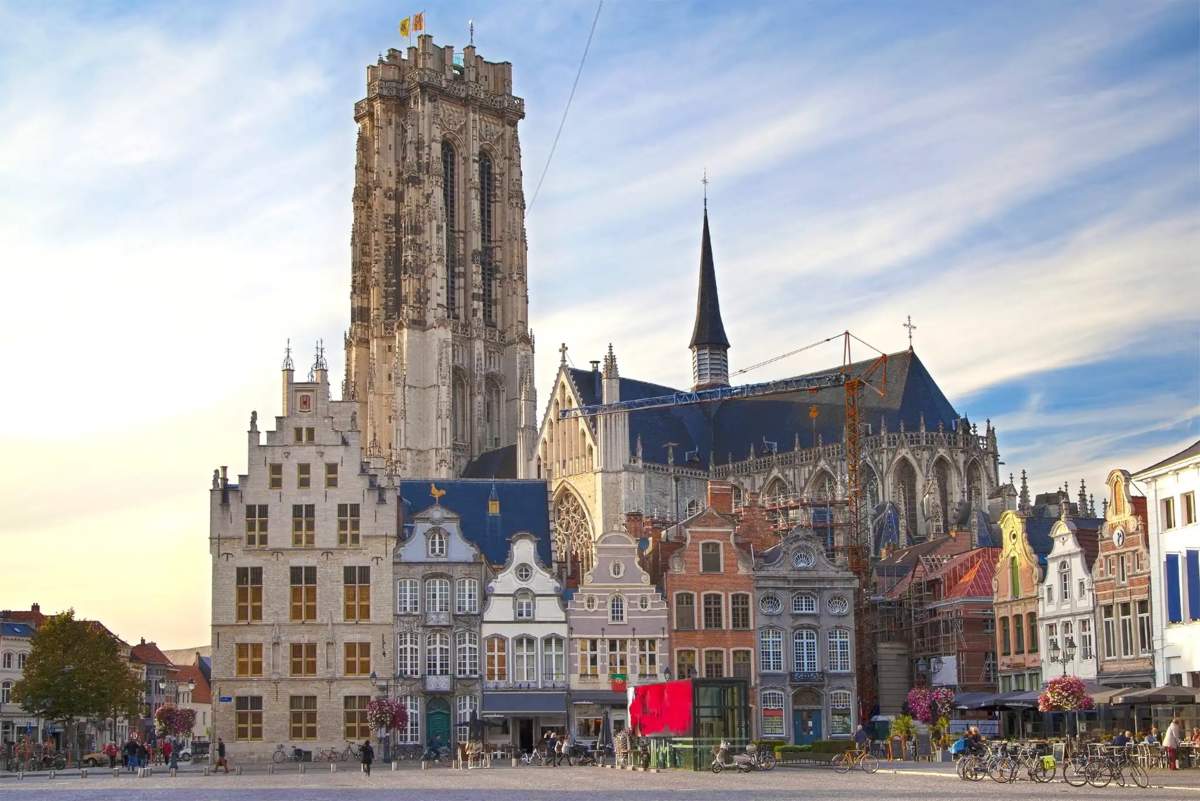
Mechelen
Quiet centre · no crowds
St Rumbold's Tower is 97 metres tall; on a clear day the climb gives you a view over half the country. Below — an almost empty Grote Markt and the Dijle embankments: Belgium as the locals see it, not the tour groups.
- LightMorning and evening on the square; the view from the tower — in clear weather, best right after rain.
- SeasonAll year.
- The catchThe town is small: an hour to an hour and a half is enough for a session — easy to combine with Antwerp.
- LocationOpen in Google Maps
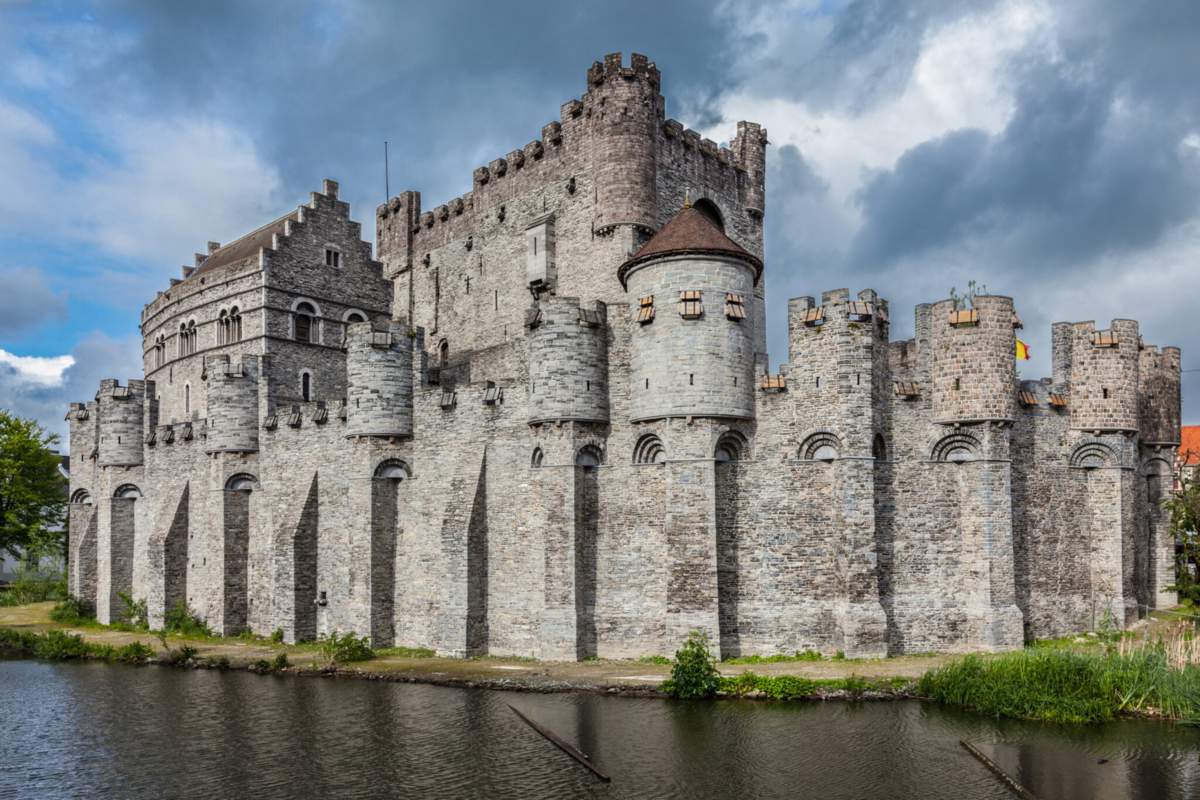
Ghent — the Gravensteen castle
Fortress · 12th century
A real fortress of the Counts of Flanders in the middle of the city: grey stone, a moat, towers without “Disney-style” restoration. A strong backdrop for dramatic portraits and wedding series with character.
- LightMorning — soft light on the stone and calm moat water; a stormy sky only helps.
- SeasonAll year.
- The catchInside is a museum with a flow of visitors; outside is freer — and more striking.
- LocationOpen in Google Maps
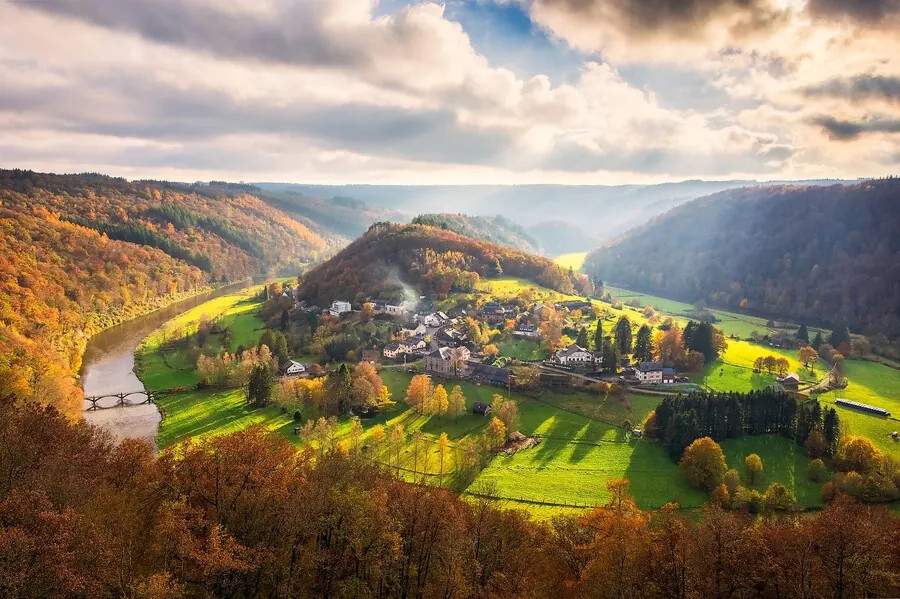
The Ardennes — the Semois valley
River bends · golden autumn
The river Semois winds between forested hills: Bouillon with Godfrey's fortress, Frahan, and the view over the “Giant's Tomb” — a giant loop of the river. The country's main autumn location, and the prime candidate for a misty morning.
- LightSunrise from the viewpoints: mist over the river and the first light on the hills.
- SeasonThe second half of October — the gold of the forests; in summer — green and empty roads.
- The catchImpossible without a car, and the viewpoints are spread out: allow a separate day.
- LocationOpen in Google Maps
Light and weather by month
Brussels: average daytime temperature and day length. Rain is possible in every month — don't ask “will it rain?”, ask “what is in bloom, and how much light is there?”.
| Month | Day length | Daytime temp. | What to shoot |
|---|---|---|---|
| January | ≈ 8 h | 6° | Empty streets, mist, the evening lights already on by 17:00. |
| February | ≈ 10 h | 7° | Carnivals (Binche, Aalst); still “winter” light — low and soft all day. |
| March | ≈ 12 h | 11° | The first flowers, cities without crowds. The weather is a lottery. |
| April | ≈ 14 h | 15° | Hallerbos bluebells, cherry blossom in Schaerbeek, the Laeken greenhouses, Floralia at Groot-Bijgaarden. |
| May | ≈ 15.5 h | 19° | The best balance of the year: greenery, warmth, long evenings, crowds still moderate. |
| June | ≈ 16.5 h | 22° | The longest day; sunset after 21:30 — an evening session with no rush. |
| July | ≈ 16 h | 24° | Festivals and the coast; harsh midday light — shoot in the morning and evening. |
| August | ≈ 14.5 h | 24° | The Flower Carpet on the Grand-Place (even years); many local businesses close for the holidays. |
| September | ≈ 12.5 h | 20° | Warm, lower light and fewer tourists: the second-best month of the year. |
| October | ≈ 10.5 h | 15° | The gold of the Ardennes, beer season, early dusk for atmospheric frames. |
| November | ≈ 9 h | 10° | The greyest month: interiors, galleries, stations, the city at night. |
| December | ≈ 8 h | 7° | Christmas markets and illuminations; the photographer's “daylight” is the blue hour at 17:00. |
Questions and answers
The answers are short on purpose: the takeaway first, then the details. The questions are grouped by topic — places, light, seasons, permits, clients, and the craft itself.
Places and routes
If I have only one day for Belgium — where do I go?
In short: Bruges at dawn + Ghent in the evening — or Brussels only, if the day is short.
Trains solve everything: Brussels–Ghent ≈ 30 minutes, Brussels–Bruges ≈ 1 hour, Ghent–Bruges ≈ 25 minutes. A realistic plan: stay the night in Bruges (sunrise at Rozenhoedkaai with no crowds), the day there, then the evening train to Ghent for the blue hour at the Graslei. Don't chase three cities in a day — you'll get three midday crowds instead of three sunrises.
Bruges or Ghent for a couple's photo session?
In short: Bruges is the “fairytale”, Ghent is the “film”. For a first trip and wedding frames — Bruges.
Bruges is more compact and predictable: all the iconic spots are within a 15-minute walk. Ghent is livelier and more varied in its backdrops (the castle, the embankments, street art in the Werregarenstraat lane), and its evening lights are more beautiful. If the couple is shy of attention — Ghent: there, people barely look at you; in Bruges, you're part of the attraction.
Which places in Brussels, besides the Grand-Place?
- Mont des Arts — the main view over the old town and the Town Hall spire.
- Galeries Royales Saint-Hubert — glass vaults, shop windows, a rescue in the rain.
- Sablon — the antiques quarter and the church of Notre-Dame du Sablon.
- The Royal Palace and the park — strict classicism for portraits.
- Flagey and the Ixelles ponds — Art Nouveau mansions, “local” Brussels without tourists.
- The European Quarter — glass and geometry for brand shoots.
Where do I shoot a wedding that doesn't look like everyone else's?
In short: a castle or estate in the Ardennes, a greenhouse, an Art Nouveau interior — instead of yet another square.
Belgium is full of châteaux that are rented out for weddings: stone, parks, ponds — and complete privacy instead of passers-by in the frame. In the cities, look for Art Nouveau: the houses of Victor Horta and his school give a backdrop that no other country repeats. In winter, interiors win: Antwerp's station, the Brussels galleries, greenhouses.
How many locations can we realistically fit into one session?
In short: 3–4 spots in one district in 1.5–2 hours. Not two cities.
The classic Brussels route — Grand-Place → Galeries Saint-Hubert → Mont des Arts → Royal Palace — fits into a single walk. Every change of city eats at least an hour in travel and in the couple “warming up” again. Better to go deeper in one place: different framings, light and details will give you a series, not a set of postcards.
Leuven and Mechelen — worth the detour, or are they “second tier”?
In short: worth it — that's exactly where Belgium exists without the tourist showcase.
Leuven (~25 minutes from Brussels): the country's oldest university, the “lacework” town hall on the Grote Markt, the UNESCO-listed Grand Beguinage and Belgium's oldest botanical garden. Mechelen — between Brussels and Antwerp: St Rumbold's Cathedral tower (the climb gives a view over half the country), the quiet Dijle embankments and an almost empty centre. Both towns are the plan for those who have already shot Bruges and want living frames, not postcards.
What is there to shoot on the coast, besides the beach?
- The coastal tram (Kusttram) — runs the whole length of the coast from De Panne to Knokke-Heist, ~67 km: a ready-made “road movie” backdrop and a way to move between spots.
- Ostend — the Royal Galleries and the Wellington Racecourse: Belle Époque architecture right by the sea.
- De Haan — early-20th-century villas in the dunes, the coast's most “resort-retro” backdrop.
- Knokke-Heist and the Zwin nature reserve — villas, art galleries and birds over the polders.
- Nieuwpoort and the fishing harbours — the lighthouse, the piers and morning boats instead of beach crowds.
Where in Brussels do I shoot modern architecture and street?
In short: the European Quarter, the canal and Tour & Taxis — 21st-century Brussels instead of the postcard one.
The glass and diagonals of the European Quarter (the Berlaymont building, the European Parliament by Luxembourg Square) — a backdrop for brand and editorial shoots. The canal district: former warehouses, graffiti and the Kanal — Centre Pompidou site. Tour & Taxis — restored warehouses with huge glass roofs, bright inside even in the rain. Plus the Flagey quarter — street life, cafés and the “real” city without tour groups.
Which castles work for a wedding shoot?
In short: city castles for a couple's walk; private châteaux in the Ardennes and Brabant for the whole wedding.
The Gravensteen in Ghent is a fortress right in the city centre, good for a short session. Near Brussels: Beersel (red brick and a moat) and Gaasbeek with its park — classics for portraits. For a turnkey wedding, couples rent private châteaux: the venue takes care of the reception, and the photographer gets the park, the stone and the privacy. Every castle has its own rules and fees for professional work — that gets clarified before the date is booked, not on the wedding day.
Light and time of day
What time is the “golden hour” in Belgium?
In short: it depends on the month more than you're used to. June and December are different planets.
At the end of June, sunset is around 21:55, the golden hour is roughly 21:00–22:00, and sunrise is at 5:30. At the end of December, sunset is at 16:40: an “evening” session starts at 15:30, but the blue hour and the city lights are there by 17:00. Before a shoot, check the sun calendar for your exact date: the difference between May and July is more than an hour.
Why does everyone recommend dawn rather than sunset?
Sunset in Belgium is beautiful, but the iconic spots are full at that hour: dinners, strolls, excursions. Dawn gives the same quality of light and empty streets. A canal bonus: at night there are no boats and no wind, the water is smooth — reflections only happen in the morning. A compromise for night owls: the blue hour after sunset, when the crowd disperses into the restaurants.
What do I do with the harsh midday sun in summer?
- Move into the shade of the architecture: arcades, galleries and the old town's narrow streets act as a “softbox”.
- Shoot the day's interior spots: stations, the Galeries Saint-Hubert, museums (where permitted).
- Use midday as the time to move, have lunch and review frames — that's how Belgian photographers plan the day.
Overcast — is the shoot ruined?
In short: quite the opposite. For portraits, Belgian cloud cover is a gift.
A grey sky works as a giant softbox: even skin, no harsh shadows and no squinting, saturated colours in the stone and the greenery. Half of the “atmospheric” frames of Bruges and Ghent were shot in exactly this weather. Sun here is a pleasant bonus, not a condition.
What is the blue hour, and why is it worth hunting in Belgium?
In short: the 20–40 minutes after sunset, when the sky is still blue but the city lights are already on — the best time for the embankments.
At Brussels' latitude, twilight is long, especially in June: the blue hour lasts noticeably longer than in southern countries. This is the window for shooting the Graslei in Ghent and the canals of Bruges: the warm light of windows and lamps against the cold sky, reflections in the water — and the crowds already gone to the restaurants. You'll need a tripod or fast lenses: there is little light, but it's the best of the whole day.
How do I get mirror reflections in the canals?
- Time — dawn: at night the boats are moored, the wind drops, the water is smooth. By midday the tour boats “churn” the canal until evening.
- Position — bridges and low embankments: the lower the camera sits to the water, the longer the reflection.
- An ND filter by day — a long exposure smooths the ripples if the morning didn't work out.
- After rain — the cobblestones become a second mirror: you get reflections even without a canal.
When do the city lights come on?
The illumination of monuments and embankments switches on at dusk — in summer that's after 22:00, in winter around 17:00. Ghent is considered the benchmark: the city has a dedicated “light plan”, with the embankments and towers lit as a single scene, and every three years it hosts the Festival of Lights (Lichtfestival), when the centre turns into a night exhibition. For a winter session it's a gift: an “evening” shoot with the lights fits into 16:30–18:00, not the middle of the night.
Seasons and weather
When is Belgium at its best for a photo session?
In short: May, June and September. If you must pick one date — the second half of May.
May–June: days of up to 16.5 hours, fresh greenery, 19–22°, and tourists not yet at full volume. September: warm, low light and emptying cities. April is for the flowers (Hallerbos, the greenhouses), October for the golden Ardennes, December for the Christmas illuminations.
Is it true that it rains all the time in Belgium?
It rains on 12–16 days a month all year round, but more often it's a short downpour than a “wall of rain for the whole day”. The practical conclusion: don't “cancel if it rains” — build a route with covered spots (galleries, stations, cafés with windows), and keep a transparent umbrella in the plan: it looks great in the frame, and the cobblestones after rain give reflections that people travel here for on purpose.
When does Hallerbos bloom, and how do I not miss it?
The peak is usually mid-April, but it shifts by ± a week from year to year: a warm spring speeds it up, a cold one delays it. Follow the official bloom reports from the end of March and keep two spare weekends. On weekends the forest has traffic jams and crowds — weekdays and dawn only. Staying on the paths is mandatory: bluebells crushed underfoot die for years.
The Flower Carpet and the Royal Greenhouses — worth timing a trip around them?
In short: yes, but book everything well in advance.
The Flower Carpet is a giant pattern of begonias on the Grand-Place, in mid-August, every two years (even years), and it lasts only a few days. The Laeken greenhouses are open for ~3 weeks in April–May, and tickets disappear within days of going on sale. Both events sell out: hotels and tickets first, the photographer right after.
Is there any point shooting in winter?
Yes, if you play by winter rules: the day is ≈ 8 hours long, but the whole day is in “golden hour mode” — the sun never climbs high. The Christmas markets of Brussels, Bruges and Ghent, the illuminations, mist over the canals, empty streets in January. Snow is a rare stroke of luck (more often in the Ardennes), not a plan: don't count on it — but if it falls, drop everything.
When is the golden autumn in the Ardennes?
In short: the second half of October — but the peak shifts by a week either way from year to year.
The beeches and oaks of the Ardennes colour in a wave: first the heights around Spa and the Hautes Fagnes, then the river valleys. A morning after a clear night gives mist over the Meuse and the Semois — the “castle above the clouds” shot is taken exactly then. Watch the forecast from the start of October and keep your weekends flexible: the golden phase lasts 10–14 days, and half of them are rain.
Festivals: a hindrance to a shoot, or a gift?
In short: for reportage — a gift; for a quiet couple's session — a disaster. Check the calendar before choosing a date.
Gentse Feesten (Ghent, 10 days in July) and the Ommegang in Brussels close off the centres and draw the crowds — portraits are impossible there, atmosphere is unlimited. The Carnival of Binche (UNESCO heritage) and the carnival in Aalst — February–March, the strongest reportage material of the year. Christmas markets from the end of November give you evening locations without searching. The rule is simple: the session date is checked against the city's events calendar just as it is against the weather forecast.
Where and when do I catch the mist?
Mist is Belgium's signature effect, not bad weather. The recipe: autumn or winter, a clear night before the shoot, dawn by the water. The canals of Bruges and Ghent, the Meuse at Dinant, the High Fens (Hautes Fagnes) — the addresses where mist is almost guaranteed from October to February. It “eats” the background and the crowds, leaves the silhouettes of towers and bridges — and lifts by 9–10 in the morning, so once again it's a story about getting up early.
Permits and the law
Do I need a permit to shoot in the street?
In short: a walk with a camera and a couple — no. A shoot that takes over the street — yes.
An ordinary photo session without closures and heavy equipment needs no permit in Brussels. If you're setting up lights, putting tripods in the middle of a walkway, bringing a crew and props — that's already an “occupation of public space”: an application to the municipality through the Film Commission (visit.brussels), a separate one for each municipality if the location sits on a border between two. The answer usually takes up to 2–3 weeks — allow the time.
Is a tripod allowed?
In the street — yes, as long as you don't block the passage or create a “film set” (in that case, see the permit question). Inside museums, churches and stations the rules are their own: a tripod and flash are usually forbidden or need clearance, and in some places commercial shooting itself is banned. Check the rules of the specific venue before the visit, not at the entrance.
And a drone? I'd love a canal from the air.
In short: in city centres — almost always no. Belgium is one of the EU's most “closed” countries for drones.
The European rules apply: operator registration is mandatory for any drone with a camera, the ceiling is 120 m, and flights are within visual line of sight only. Then the Belgian geozones begin: cities, airports, military and nature-protection zones are closed — the droneguide.be map is checked before every flight. Central Brussels is additionally “weighted down” by the EU institutions, NATO and the Royal Palace. For drone work in Brussels you need two permits: the aviation one (DGTA / FPS Mobility) and the municipality's, with a flight plan and insurance in the application.
Can I publish photos of passers-by? What about image rights?
In short: you may shoot in a public place; you may not publish a recognisable portrait without consent.
Belgium has a strong right to one's own image: publishing — and especially commercial use of — a frame in which a person is recognisable and is the main subject requires their consent. People as part of a street scene or an event are a different matter. For clients this is settled by a release in the contract; for street photography — by the rule “wide shot and context, not someone else's portrait in close-up”.
Shooting inside castles, hotels and restaurants — what's needed?
That's private territory: the owner's permission — and at wedding venues, usually a separate clause (and sometimes a fee) for professional photography in the rental agreement. Clarify three things in advance: whether you can shoot before opening / after closing, where the lights may be set up, and whether the venue has “its own” recommended photographers with whom it shares a commission. No surprises on the wedding day.
Can I shoot in churches and cathedrals?
In short: as a tourist without flash — usually yes. During a service, and commercially — only by arrangement.
A working church is not a museum: shooting during a service is inappropriate and often expressly forbidden, and flash and tripods are unwelcome almost everywhere. For a wedding, the photographer agrees everything with the parish in advance: where to stand, whether movement during the ceremony is allowed, whether any moments may not be photographed. In the popular cathedrals (St Michael and St Gudula in Brussels, St Bavo's in Ghent) the rules are stricter, and entry at tourist hours may be charged — check the church's website before the visit.
Parks and botanical gardens: is a private couple with a photographer a “commercial shoot”?
To the park's administration — usually yes: a professional camera, a couple in formal clothes and a photographer visibly at work read as a commercial session. The large gardens (the Botanic Garden in Meise, the royal parks, castle gardens) ask for an application in advance and sometimes charge a fee; slipping in “quietly” ends with a conversation with security in the middle of the session. An ordinary walk with a camera, shooting for yourself, needs no permit anywhere.
Publishing photos of children: what do parents and the photographer need to know?
In short: publishing children's photos needs the parents' consent — and the photographer must obtain it before the post, not after.
The right to one's image in Belgium extends to children: the parents decide on publication. In a family or wedding photography contract this is a separate clause: whether the photographer may show frames with children in the portfolio and on social media, or whether the gallery is fully private. Good practice is to ask again before a specific publication: family circumstances change, but a screenshot lives forever.
For clients, before the shoot
We want lifestyle shots with waffles or coffee. Any tips?
In short: Maison Dandoy for the look, local friteries for the vibe.
A waffle in a beautiful box from Maison Dandoy (they have shops in Brussels, Bruges, and Ghent) or a cone of Belgian fries from a street fritkot are the best authentic lifestyle props. Grab a coffee at a specialty spot with a nice terrace (like Fika or Stella in Brussels, Café Labath in Ghent) for relaxed, unposed portraits. Just be prepared to shoot fast before the ice cream or coffee gets cold.
What should we wear for a photo session in Belgian cities?
- Stone, brick and cobblestones love deep colours: burgundy, emerald, dark blue, caramel. Neon and big logos always lose.
- Shoes — made for cobblestones: a stiletto heel gets stuck between the stones. Bring a spare pair for the walks between spots.
- An outer layer is a must even in summer: it's windy by the water and on the bridges. A raincoat or a trench in the frame is a plus, not a compromise.
- For a couple or a family — one palette for everyone, not identical outfits.
If it rains on the day of the shoot — is everything lost?
In short: no. In Belgium there is no “bad weather” — there are routes without a roof.
The photographer rebuilds the route: the Galeries Saint-Hubert, stations, cafés, arcades — and wet cobblestones with reflections for dessert. A transparent umbrella solves both the protection and the prop. Rescheduling only makes sense in storm winds; ordinary Belgian rain is part of the local colour, and in photos it looks expensive.
We don't know how to pose. Is that a problem?
No, that's the norm: 95% of the people in a photographer's portfolio are not models. A professional's job is direction: where to stand, where to look, what to do with your hands, and movement instead of frozen poses. The best frames happen on the walk between spots, not “at the spot”. Your job is to sleep well, not be late for the light, and trust the process for the first ten minutes.
A shoot with children, or with a dog — is that realistic?
Yes, with a timing adjustment: children are fresh in the morning and after the daytime nap, so family sessions are set for the morning — the streets are empty into the bargain. Bring a snack, a change of clothes for the child, and a favourite toy. Dogs are allowed in almost all parks and on the beaches out of season (in summer, beaches have time-of-day restrictions — check by municipality). The lead is edited out of the frame; the dog is not.
How far ahead should we book the photographer, and how is a wedding day structured?
For May–September, the good dates with sought-after photographers go 9–12 months ahead; for the “beautiful” Saturdays — earlier. Out of season, 2–3 months is realistic. As for the day: plan the couple's portraits for dawn or the pre-sunset hour, not the midday gap between the ceremony and the reception; 30 minutes together in the right light give more than an hour in the wrong one. And keep 15 minutes of slack for Belgian traffic and weather.
Why do we need a pre-wedding session (love story) before the wedding?
In short: it's a rehearsal, after which on the wedding day you stop noticing the camera.
In 1–2 hours of walking the city, the couple gets used to the photographer and to how he poses and directs, checks the makeup and hair “in frame”, and the photographer learns your best angles and pace. On the wedding day, the portraits take half the time — and are twice as alive. Plus you already have beautiful photos for the invitations and the wedding website.
In what form, and how quickly, will we receive the photographs?
The usual market standard: an online gallery for viewing and downloading, a preview of a few frames in the first days, and the full series after selection and retouching. As a timing guide: a walking session — 1–2 weeks; a full wedding day — 3–6 weeks in season (the volume is many times larger). The exact deadlines, the number of finished frames and the file format (full resolution for printing) are fixed in the contract before booking, not figured out after the wedding.
How many hours of a photographer do we need for a wedding?
- 3–4 hours — the registry office, the couple's walk and the group photos: the “core” of the day.
- 6–8 hours — from the bride's preparations to the first dance, without the whole reception.
- 10–12 hours — the full day: the morning, the ceremony, the walk, the reception and the end of the evening.
What decides it is not the clock but what matters most to you: if the preparations and the morning's emotions are important — don't economise on the start of the day; if the climax is the evening, shift the photographer's hours later rather than stretching them “from start to finish”.
Makeup and hair: what matters specifically for photography?
In short: a matte finish, a trial look, and time in reserve — the three things that show in photos the most.
The camera amplifies skin shine: ask the makeup artist for a matte or satin finish, and take powder / blotting papers along on the walk. Photograph the trial makeup in daylight — the phone will honestly show what the camera will see. As for timing: preparations in Belgium often run late, so allow a +30-minute buffer — being late for the dawn or pre-sunset light cannot be compensated by anything.
Gear and logistics
How can I save on train tickets?
In short: use the Weekend Ticket (Weekendbiljet).
From 19:00 on Friday until Sunday evening, return train tickets anywhere in Belgium are 50% off. If you are planning a couple's shoot or a scouting trip on a weekend, this is the main way to cut travel costs. Buy them at the machines or via the SNCB app. Also, kids under 12 travel for free when accompanied by a paying adult.
Is it safe to carry expensive camera gear in the cities?
In short: generally yes, but watch the stations and never leave gear in a car.
The areas around major stations (especially Bruxelles-Midi and Antwerpen-Centraal) require standard city awareness: don't leave your gear on café tables and keep your backpack zipped. The absolute golden rule for photographers on road trips: never leave any bags visible in a parked car, even for five minutes at a viewpoint. Break-ins for visible electronics are common.
SOS: where do I rent a lens or buy film if something breaks?
In Brussels, the institution is PCH Pro Shop (Rue du Midi) — they have rentals, rapid repairs, and a wide array of professional gear. For analog film supplies and developing in Brussels, drop by Mori Film Lab or Campion. In Antwerp, Grobet is the go-to spot. Save these on your map just in case.
What gear do Belgian cities call for?
- A wide zoom (16–35 or 24–70) — narrow streets and squares where there's nowhere to “step back”.
- A fast prime (35 or 50 mm, f/1.4–1.8) — the blue hour, interiors, evening embankments.
- 85 mm — portraits with separation from a textured background.
- An ND filter — smooth canal water by day, and empty streets on a long exposure.
- A rain cover for the camera and lens cloths — not an option but a baseline in this country.
How do I get between the cities?
In short: the train. The car loses almost every time.
The SNCB/NMBS network connects everything: Brussels–Ghent ≈ 30 min, Brussels–Antwerp ≈ 40 min, Brussels–Bruges ≈ 1 hour, trains are frequent, and the stations are in the centre (Antwerp's is a location in its own right). The historic centres are pedestrianised or charge for entry, with parking in short supply; Ghent has one of the largest pedestrian zones in Europe. A car is needed only for the Ardennes and the coast beyond the resorts.
Which language do we use to get by on the ground?
Belgium is trilingual: Dutch in Flanders (Bruges, Ghent, Antwerp, the coast), French in Wallonia (Dinant, the Ardennes), and both in Brussels. English is understood almost everywhere, especially in Flanders. A practical point: city names change on the signs — Gent/Gand, Brugge/Bruges, Antwerpen/Anvers, Liège/Luik. In the navigator and on station departure boards, look for both variants.
Where do we recharge, change clothes, wait out a downpour?
Cafés are the official “bases” of a Belgian shoot: ordering a coffee buys you a table, a socket, a toilet and a roof for the length of a downpour. For the couple to change, hotel lobbies and the large stations work. Left-luggage lockers exist at the central stations of all four cities — the backpack with the second camera doesn't have to walk with you all day.
And if we do come by car? Parking and low-emission zones
In short: for a shoot day the car is the backup option — the centres are closed, parking is expensive, and the LEZ can fine you.
Brussels, Ghent and Antwerp run low-emission zones (LEZ): older diesel and petrol cars are kept out of the centre, and a foreign-registered car must be registered in the system in advance — otherwise the fine arrives by post. The historic centres of Ghent and Bruges are mostly pedestrian, and street parking is full by 10 in the morning. The practical scheme: a park-and-ride (P+R) on the outskirts + a tram or train into the centre; the car stays for the Ardennes and the coast, where you can't do without it.
A train strike on the day of the shoot — what do we do?
Belgian strikes are almost always announced a few days ahead, and SNCB publishes an alternative timetable the day before. The algorithm: check the operator's news 48 and 24 hours ahead, move your departure to an earlier train (some services run even during a strike), and keep a transfer or a taxi between cities in reserve — the distances are laughably short, Brussels–Ghent by car is ~50 minutes outside rush hour. For an out-of-season wedding the rule is stricter: the photographer and the key vendors stay the night in the wedding city rather than travelling in the morning.
Backups: how do we not lose the shoot?
In short: a wedding can't be re-shot — so the copy is made on the day of the shoot, not “during the week”.
- A dual-slot camera writes to both cards at once — the standard for wedding work.
- That same evening — a copy to the computer and to a separate drive / the cloud: the “3-2-1” rule (three copies, two media, one off-site).
- The cards are not formatted until the gallery is fully delivered to the client.
Clients should ask about this when booking: a professional answers the backup question without a pause.
Before you set out: a quick check
- The light for the date: the sunrise and sunset times on the day of the shoot itself, not “like last month”.
- The weather by the hour: rain in Belgium is local — look at the hourly forecast for the city of the shoot.
- Events: square closures, festivals, football matches and visits to the European Quarter.
- Permits: private venues, tripod and lights in interiors, the drone — geozones on droneguide.be.
- Trains: the SNCB timetable there, and the last train back; strikes are announced in advance.
- Plan B: at least two covered locations along the route, and a transparent umbrella in the boot.
Shoot your story in Belgium
I am Sergii, a commercial photographer based in Brussels. I know the light, the rules, and the hidden corners of these cities.